Protect Your Property with Better Insulation
Spray Foam vs. Blown-In Insulation: Which Is Best for Your Attic?
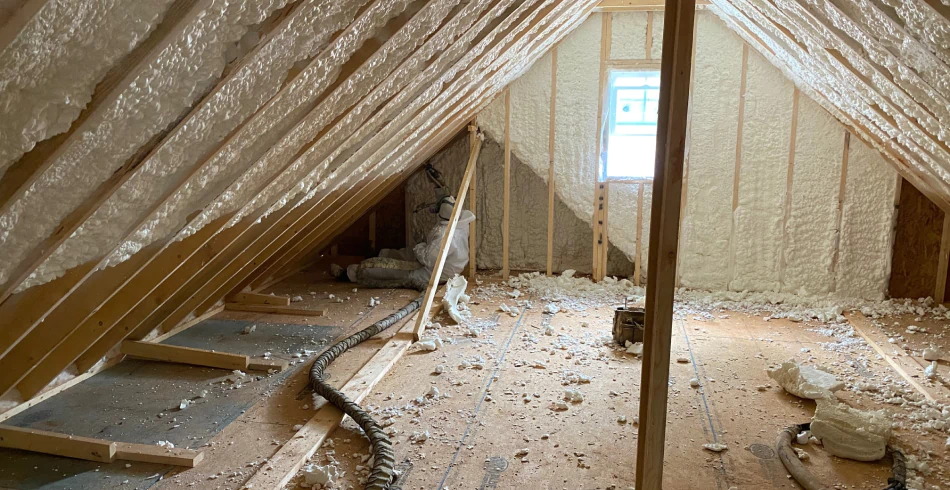
How to Choose Between Spray Foam and Blown-In Insulation
Understanding Material Properties and Application Methods
The fundamental difference between these two popular attic insulation solutions lies in their physical composition and how insulation contractors apply them. Spray foam insulation begins as a liquid chemical mixture that expands rapidly upon application, creating a dense, rigid barrier that adheres directly to surfaces. This expansion allows it to fill cracks, gaps, and irregular spaces, forming an airtight seal that blocks both heat transfer and air infiltration. The two primary types are open-cell, which is lighter and more flexible with sound-dampening properties, and closed-cell, which offers superior moisture resistance and structural reinforcement.
Blown-in insulation, by contrast, consists of loose cellulose or fiberglass particles pneumatically installed through specialized equipment. Insulation installers use hoses to distribute the material evenly across attic floors or into wall cavities, where it settles into a thick blanket. Cellulose blown-in products are manufactured from recycled paper treated with fire retardants, while fiberglass versions use fine glass fibers. This method excels at covering large, flat attic floor areas quickly and can be added over existing insulation to boost thermal resistance without removal.
The application process fundamentally affects your project timeline and home accessibility. Spray foam insulation services require careful surface preparation, climate-controlled conditions during installation, and a curing period before the space becomes fully usable. Blown in insulation contractors can typically complete installations faster with minimal disruption, as the material requires no curing time and creates less mess. However, spray foam’s adhesive properties mean it addresses air sealing and insulation simultaneously, while blown-in materials focus primarily on thermal resistance and may require separate air sealing measures for optimal performance.
Investment Analysis and Long-Term Value
Initial installation costs represent one of the most significant decision factors for homeowners evaluating attic insulation options. Spray foam typically commands a higher upfront investment, with closed-cell formulations ranging from two to three times the cost of blown-in alternatives per square foot of coverage. This price difference reflects the specialized equipment, technical expertise, and chemical materials required for proper application. Open-cell spray foam falls in the middle of the price spectrum, offering some cost savings while maintaining many performance benefits.
Blown-in insulation presents a more budget-friendly entry point, particularly for straightforward attic floor applications. The material cost remains lower, and insulation companies can complete installations more quickly, reducing labor expenses. For homeowners working within tighter budgets or addressing large attic spaces, this cost efficiency makes blown-in solutions attractive. Adding layers over time is also feasible, allowing you to increase R-value incrementally as finances permit.
Long-term return considerations shift this calculation substantially. Spray foam’s superior air sealing capabilities often deliver greater energy savings month after month, particularly in homes with significant air leakage issues. The average homeowner recovers the premium investment through reduced heating and cooling costs over seven to twelve years, depending on climate severity and energy prices. Spray foam also adds minor structural reinforcement to roof decks and resists moisture intrusion more effectively, potentially reducing maintenance costs over the insulation’s lifespan, which can exceed thirty years with proper conditions.
Blown-in insulation offers solid thermal performance at its installed R-value, but it does not address air infiltration, which accounts for twenty-five to forty percent of heating and cooling energy loss in typical homes. Pairing blown-in insulation with professional air sealing services bridges this gap and improves overall performance, though it adds to the total project cost. Cellulose and fiberglass materials may also settle over time, losing five to twenty percent of their initial thickness and requiring occasional top-up applications to maintain target R-values. When calculating true lifetime value, consider both the initial expense and the ongoing operational savings each solution delivers for your specific home conditions.
Climate Considerations for Kansas Homeowners
Kansas experiences pronounced seasonal temperature swings that place unique demands on attic insulation systems. Summer temperatures in the Emporia area routinely climb into the mid-nineties, with attic spaces reaching one hundred forty degrees or higher when inadequately ventilated or insulated. These extreme conditions cause air conditioners to run continuously, driving up electricity costs and stressing HVAC equipment. Winter temperatures frequently drop into the teens and occasionally below zero, forcing heating systems to work overtime. An effective attic insulation solution must handle both extremes reliably.
Spray foam insulation performs exceptionally well in this climate because it creates a continuous thermal and air barrier. During summer months, closed-cell spray foam prevents superheated attic air from radiating through ceilings into living spaces, keeping indoor temperatures stable even during extended heat waves. In winter, it stops warm indoor air from escaping through gaps around penetrations, recessed lights, and framing joints. Homeowners consistently report noticing immediate comfort improvements after spray foam installation, particularly in second-story bedrooms that previously felt stuffy in summer and drafty in winter.
Blown-in insulation provides excellent thermal resistance for Kansas homes when installed to appropriate depth. Achieving R-38 to R-49 values, which are recommended for this climate zone, requires twelve to sixteen inches of cellulose or fiberglass. The material’s loose-fill nature allows it to conform around joists, wiring, and other obstructions, providing reasonably consistent coverage. However, wind washing can occur in vented attics during particularly gusty conditions, common during spring and fall in central Kansas. Air moving through the insulation reduces its effective R-value and allows conditioned air to escape, diminishing energy savings.
Moisture management represents another critical consideration. Kansas humidity levels fluctuate significantly, and attic spaces can experience condensation issues during temperature transitions, particularly in spring when warm, humid air contacts cool surfaces. Closed-cell spray foam acts as a vapor barrier, preventing moisture migration and protecting roof decking from condensation damage. Blown-in cellulose includes moisture-resistant treatments, but it remains vapor-permeable and requires proper attic ventilation to prevent moisture accumulation. Homeowners who have experienced ice damming along roof edges during winter thaws often find that addressing air leakage through spray foam application eliminates the warm air escaping into attic spaces that causes these problems.
Performance Metrics That Matter Most
R-value represents the most commonly discussed insulation metric, measuring material resistance to heat flow. Higher R-values indicate better insulating performance. Blown-in cellulose delivers approximately R-3.5 per inch of thickness, while fiberglass provides R-2.5 to R-3.0 per inch. Open-cell spray foam offers R-3.6 to R-3.8 per inch, and closed-cell spray foam achieves R-6.0 to R-7.0 per inch. Based purely on R-value per inch, closed-cell spray foam provides the most thermal resistance in the least space, which matters significantly in attics with limited clearance or when insulating roof decks rather than attic floors.
Air sealing capability deserves equal consideration because uncontrolled air movement often causes more energy loss than heat conduction through insulation. Spray foam earns its reputation here by forming an impermeable barrier when properly applied. This quality eliminates the stack effect, where warm air rises and escapes through attic penetrations, pulling cold outdoor air into living spaces through lower-level gaps. Blown-in insulation does not stop airflow, though it does slow it moderately. Homes with significant air leakage issues see dramatically better results from spray foam or from combining blown-in insulation with thorough air sealing performed by experienced insulation contractors.
Moisture control becomes particularly important in climates with humidity variation. Closed-cell spray foam acts as both insulation and vapor retarder, preventing moisture from migrating into attic spaces and condensing on cold surfaces. This dual function protects structural components and maintains insulation performance over time. Blown-in cellulose manages moisture reasonably well due to its treated fibers, which resist mold growth, but it remains breathable and depends on adequate ventilation to remove moisture. Fiberglass blown-in insulation does not absorb moisture readily but offers no vapor control, requiring separate vapor management strategies.
Longevity and performance stability over decades matter when evaluating true value. Spray foam maintains its R-value and air sealing properties essentially indefinitely when protected from UV exposure and physical damage. It does not settle, sag, or compress under normal conditions. Blown-in materials gradually compact over time, with cellulose typically settling five to ten percent and fiberglass potentially losing more loft, especially if disturbed during attic access for repairs or modifications. This settling reduces the effective R-value and may necessitate adding material to restore target performance levels after ten to fifteen years.
Making the Right Decision for Your Home
Several practical factors should guide your final insulation choice beyond material specifications and cost calculations. Start by assessing your attic configuration and accessibility. Homes with unfinished attic floors and ample clearance suit blown-in insulation beautifully, allowing quick installation with minimal complications. If you plan to convert attic space into conditioned living area or have cathedral ceilings requiring insulation at the roof deck, spray foam becomes the logical solution due to its space efficiency and ability to create an unvented conditioned attic.
Existing insulation conditions influence the decision significantly. Adding blown-in insulation over existing material works well if the current insulation remains dry, uncompressed, and free from contamination. This approach boosts R-value cost-effectively without full removal. However, if existing insulation shows moisture damage, pest infestation, or severe compression, complete removal followed by spray foam installation may deliver better long-term results despite higher initial costs. Spray foam also makes sense when air leakage problems plague your home, causing drafts, ice dams, or rooms that never reach comfortable temperatures.
Timeline requirements and household disruption deserve consideration. Blown in insulation contractors typically complete standard attic projects in four to six hours with minimal impact on daily routines. Spray foam insulation services require more time for preparation, application, and curing. During installation, occupants should vacate the home for several hours, and the space requires ventilation before reoccupancy. Families with scheduling constraints or those unable to relocate temporarily may find blown-in installation more convenient.
Environmental priorities also factor into the decision for many homeowners. Blown-in cellulose contains high recycled content and requires less energy to manufacture than foam products. It remains a favorite among those prioritizing sustainable building materials. Modern spray foam formulations have improved their environmental profiles, with many products now using blowing agents with lower global warming potential, but the chemical nature of the product and its production process carry a larger carbon footprint.
Ultimately, the best choice aligns your specific home characteristics, performance goals, budget, and priorities. Consulting with qualified insulation contractors who can assess your attic, measure current performance, and explain how each option addresses your particular needs provides the clearest path forward. Professional evaluation identifies hidden issues like inadequate ventilation, moisture problems, or structural concerns that affect insulation performance. Whether you select spray foam for maximum air sealing and space efficiency or blown-in insulation for cost-effective thermal resistance, proper installation by trained professionals ensures you achieve the energy savings, comfort improvements, and long-term value you expect from your investment. Contact our team to schedule an attic assessment and receive detailed recommendations tailored to your home’s unique requirements.